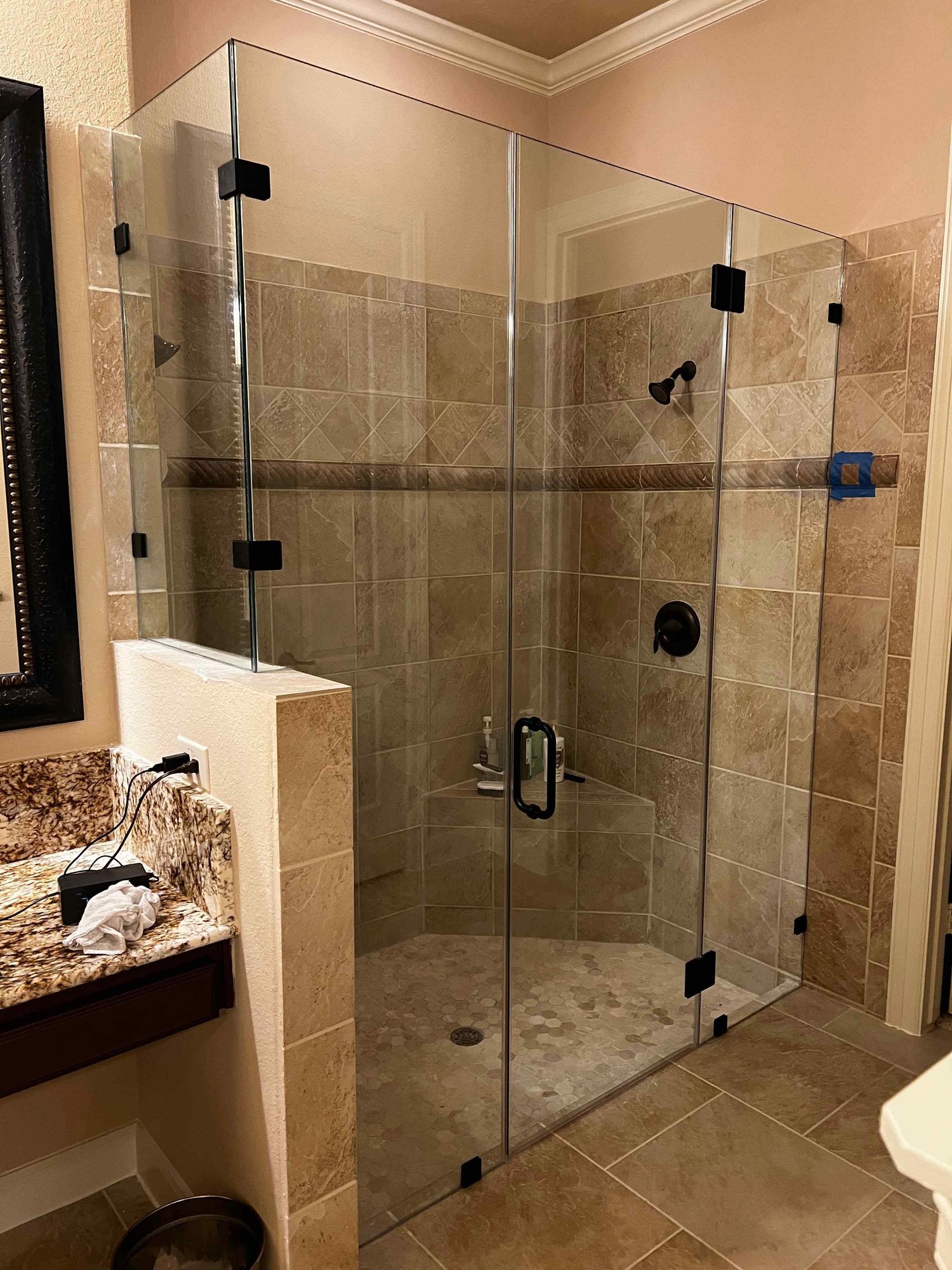
Once you know the layout of your shower, whether it's a single door, an inline door and panel, a corner, a neo-angle or a walk-in panel, the rest of the design comes down to three decisions: how thick the glass is, what kind of glass it is, and what finish the hardware comes in. Here's how to think about each one.
Glass Thickness: 3/8" or 1/2"
Every frameless shower we build uses tempered safety glass. 3/8" is the industry standard. It's rigid, safe and the most cost-effective option for most doors and panels.
1/2" glass is heavier and more substantial. It feels more solid when you open the door, and it's often the better choice for larger panels and openings. The tradeoff is cost: the glass itself costs more, and its weight calls for heavier-duty hinges.
If your shower is a standard size and budget matters, 3/8" is the right answer. If you want the most solid feel, or the panels are especially tall or wide, 1/2" is worth it.
Glass Type: Clear, Low-Iron, or ShowerGuard
Standard clear glass has a slight green tint that comes from iron in the raw materials. You mostly notice it on the edges and on thick or large panels.
Low-iron glass removes most of that tint. It's crystal clear, edges look neutral, and tile and stone colors show through truer. If you've invested in beautiful tile, low-iron glass lets you see it. We offer two low-iron glasses: Starphire and Guardian UltraClear.
ShowerGuard adds a permanent, factory-applied protective coating that keeps hard water from corroding the glass over time, and it carries a lifetime limited warranty from Guardian Glass. It's available on Guardian clear glass or on Guardian's low-iron UltraClear glass (ShowerGuard isn't made on Starphire). If you plan to keep the shower for many years, this is the upgrade we recommend most.
In our Shower Builder you'll see four glass options: Clear, Low Iron, Clear with ShowerGuard, and Ultraclear with ShowerGuard.
Hardware: Hinges, Clamps, and Handles
Frameless hardware is small, but it's the only metal in the enclosure, so it does a lot of visual work. Hinges hold the door, clamps hold fixed panels to walls, curbs and each other, and the handle is the piece you touch every day. Square hinges and clamps read modern; beveled styles soften the look. Handle styles range from simple tubular and square pulls to ladder pulls and towel bar combinations.
Choosing a Finish
We offer more than a dozen hardware finishes, from polished chrome and brushed nickel to matte black, satin brass, brushed bronze, gun metal and unlacquered brass. A few guidelines:
Match the plumbing. The shower head, valve trim and handle usually look best in the same finish family. If you mix metals, do it on purpose, for example brass shower hardware with brass vanity pulls.
Think about water spots. Polished chrome shows water spots the most. Brushed and satin finishes hide them better. Matte black is striking, but mineral spots can show on it, so plan to wipe it down.
Let the hardware recede or stand out. With low-iron glass the hardware becomes the main visual detail, so a statement finish like brass or matte black really reads. If you want the shower to disappear, brushed nickel or satin chrome blend in.
Don't Forget the Layout Details
A few practical questions affect the design too: which way the door swings, which side the handle goes on, whether a panel sits on a half wall or curb, and whether there's room for the door to open without hitting the vanity or toilet. We confirm all of this when we measure.
Try It Before You Buy It
Our online Shower Builder lets you pick the layout, size, glass and hardware finish and see your shower in a 3D preview with a budget price. We confirm the final price when we measure. Prefer to talk it through? Call (832) 953-5251, and we can bring samples of glass and hardware finishes to you.