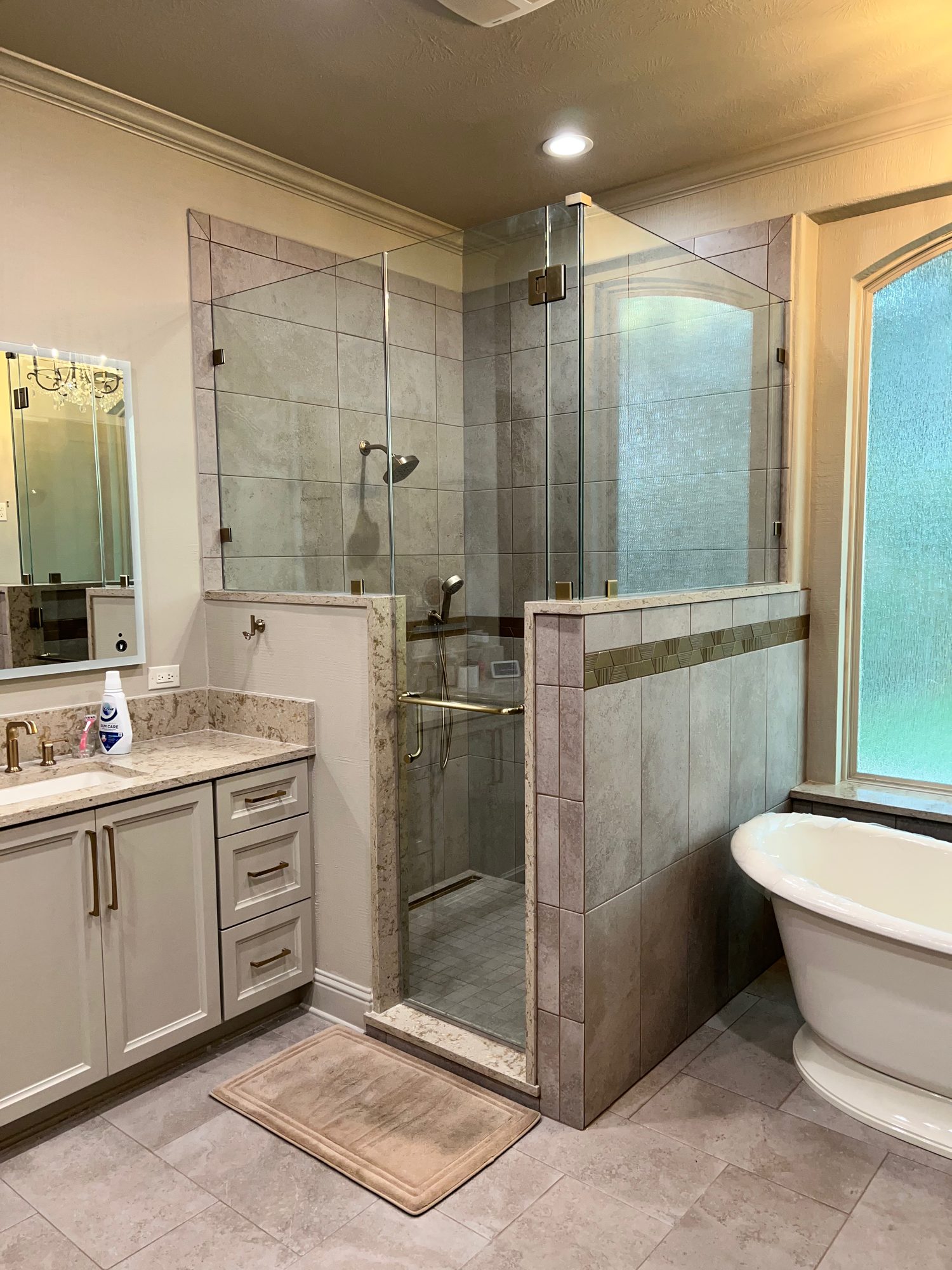
A new frameless shower looks almost invisible. Whether it still looks that way in five years has less to do with the glass than with what happens after every shower. Here's the routine we recommend to our Houston customers.
Why Glass Gets Cloudy in the First Place
Houston-area water carries dissolved minerals. When shower water dries on glass, those minerals stay behind as white spots. Left alone, the spots combine with soap residue, heat and humidity and start to etch the surface. Early buildup cleans off. Etching doesn't, because the damage is in the glass itself. The whole goal of a cleaning routine is to remove deposits before they get that far.
Every Day: Squeegee for 30 Seconds
The single most effective habit is drying the glass after you shower. A squeegee, top to bottom, takes about 30 seconds and removes most of the water before minerals can dry on it. A microfiber towel works too. Crack the door or run the exhaust fan afterward so the enclosure dries out instead of staying humid.
Every Week: A Gentle Clean
Once a week, wipe the glass with a soft cloth or non-scratch sponge and a cleaner made for glass or for soap scum. For light mineral spots, a mild acidic cleaner such as diluted white vinegar usually works. Rinse with clean water and squeegee dry when you're done. Don't forget the bottom edge and the area around the hinges and clamps, where water sits longest.
If your glass has ShowerGuard, follow Guardian's recommended cleaning products list, which is published on showerguardglass.com. Following the manufacturer's cleaning recommendations is also a condition of the ShowerGuard warranty.
What Not to Use
Skip abrasive powders, scouring pads, steel wool and razor scrapers. They leave fine scratches, and scratches give minerals somewhere new to grip. Scratches are also not covered by glass coating warranties.
Be careful with harsh chemicals on hardware. Cleaners strong enough to strip heavy scale can dull or discolor finishes like brushed brass, matte black and oil-rubbed bronze. Spray the cleaner onto your cloth rather than directly at the hinges, and rinse the metal afterward.
Treated Glass vs. Untreated Glass
Untreated glass can still stay clear for years with a daily squeegee. A protective coating makes that easier. ShowerGuard glass has a permanent coating applied at the factory, so it never needs reapplying. For clear or low-iron glass without ShowerGuard, we offer a Shield Coat add-on that gives the surface an extra protective layer. Spray-on coatings do wear over time, so expect to maintain them.
One thing no coating changes: water still spots. Even protected glass needs to be wiped and cleaned. The difference is that it stays cleanable instead of slowly etching.
A Note on Water Softeners
A whole-home water softener helps a lot, but it doesn't remove everything. Silica, a natural mineral in water, passes through softeners and bonds easily to glass, so you can still see spots between cleanings.
When Cleaning Isn't Enough
If your glass stays hazy after a thorough clean, the surface is probably etched. At that point the practical fix is replacing the glass. If you're replacing, it's worth choosing a protected glass such as ShowerGuard so you don't end up in the same place again.
Not sure whether your glass can be saved? Send us a photo or call (832) 953-5251 and we'll tell you honestly.