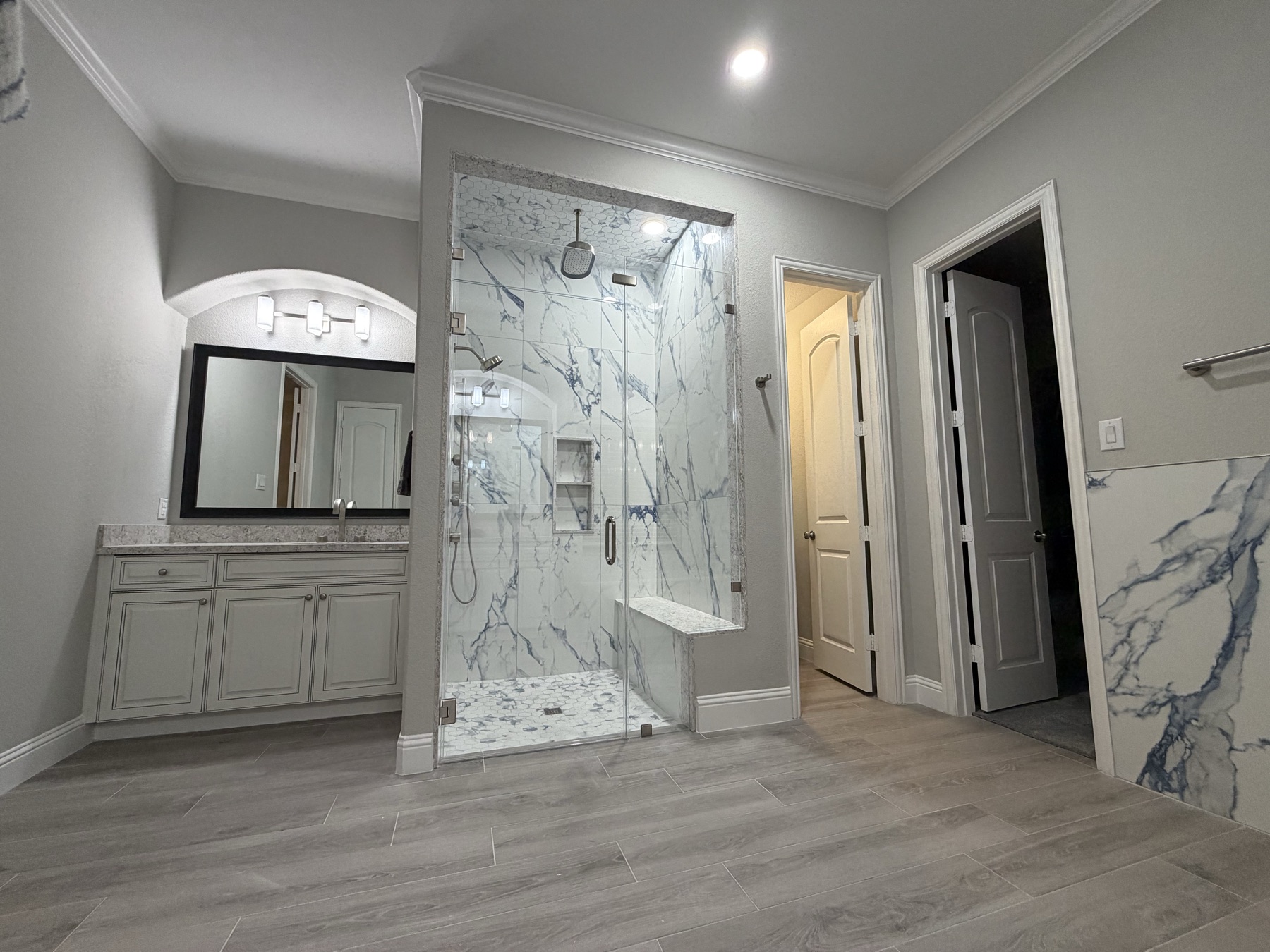
When you price a frameless shower with us, one of the glass options is ShowerGuard. It costs more than standard clear glass, so it's fair to ask what you're actually paying for. Here's a plain-English breakdown, based on what Guardian Glass, the manufacturer, publishes about the product.
What ShowerGuard Is
ShowerGuard is a shower glass made in the United States by Guardian Glass. During manufacturing, a permanent protective coating is applied to one side of the glass. The glass then goes to a Guardian certified fabricator, who cuts, tempers and finishes it to the exact size of your shower.
Because the coating is part of the glass from the factory, it is not something sprayed or wiped on after installation. Guardian describes it as made from inorganic materials, which is why it doesn't wear off and never needs to be reapplied.
Why Standard Shower Glass Gets Cloudy
Under a microscope, ordinary glass has tiny peaks and valleys on its surface. Minerals from hard water, soap residue and cleaning chemicals settle into those pores. Over time, with heat and humidity working on them, they etch and corrode the glass. That is the permanent cloudy haze you see on older shower doors, and no amount of scrubbing removes it, because it isn't on the glass anymore. It's in it.
ShowerGuard's coating fills in that rough surface and leaves it smoother, so there are fewer places for residue to lock in. Guardian reports that in its testing, ShowerGuard showed no signs of corrosion after nine months of regular hard-water exposure, while competing spray-on products showed between 40% and 85% corrosion over three to nine months.
What It Doesn't Do
ShowerGuard is not a water-repellent coating. Water will still bead and spot on the glass after a shower, and that is normal. Its job is to stop the glass itself from corroding and staining, not to make water slide off. You still clean it, it just stays cleanable.
Guardian also notes that a water softener doesn't remove silica, a natural mineral in water that bonds easily to glass. So even with a softener, some spotting can build up between cleanings.
Clear or UltraClear?
ShowerGuard comes on two base glasses. On Guardian Clear glass you get the protection with no visible difference in transparency from regular clear glass. On Guardian UltraClear, a low-iron glass, you also lose the green tint that standard glass has, especially visible at the edges. Low-iron glass makes tile and stone colors read truer, which is why it's popular for frameless enclosures. In our Shower Builder these show up as "Clear with ShowerGuard" and "Ultraclear with ShowerGuard."
The Lifetime Limited Warranty
ShowerGuard carries a Limited Lifetime Warranty from Guardian. In short, it covers the glass against visible staining, corrosion or discoloration under normal use for as long as the original owner owns the shower in the home where it was installed. A few details matter:
You need to register. Guardian asks owners to register the purchase on showerguardglass.com within 90 days, and to keep the registration page with the invoice. (Some states, including California, don't allow a registration requirement, but registering is still recommended.)
It's for the original owner, or the first buyer of a home with newly installed ShowerGuard, and it doesn't transfer. It covers glass installed in an indoor shower in North America.
It doesn't cover scratches, chips or breakage, and it requires that the glass be cleaned and maintained following Guardian's recommendations. If a claim is approved, Guardian either supplies replacement ShowerGuard glass or refunds the price difference between ShowerGuard and standard glass, up to $10 per square foot. Labor to remove and reinstall glass isn't covered. Read the full terms on Guardian's warranty page before you rely on it.
How to Tell If You Have It
ShowerGuard looks like regular glass, so it can't be identified by eye. Certified fabricators place ShowerGuard stickers on the glass that also mark the coated side, your invoice should name it, and registered dealers have a device that detects the coating.
Do You Need a Spray-On Coating Too?
No. Guardian says aftermarket wipe-on coatings aren't necessary or recommended on ShowerGuard, since they may not bond properly to the existing protective layer. That's why our Shower Builder doesn't offer our Shield Coat add-on when you pick a ShowerGuard glass.
Is It Worth It?
For most Houston homes, we think so. Hard water is the main reason shower glass ages badly, and a frameless enclosure is a long-term purchase. ShowerGuard is the one way to protect the glass that doesn't depend on reapplying anything. If the shower is in a guest bath that's rarely used, standard glass with good cleaning habits is a reasonable way to save.
You can price both side by side in our online Shower Builder, or call (832) 953-5251 and we'll walk you through it.